Jed and Azalea’s Hangar 21 South wedding moved from mixed light indoors to hard sun on the airfield and finally to near-darkness. These three photographs show how I adjusted focal length, exposure, and lighting as the scene changed. Their settings are examples from this wedding, not universal presets.
The questions I kept returning to were simple: where is the light coming from, what needs to stay sharp, and how much of the setting should remain visible?
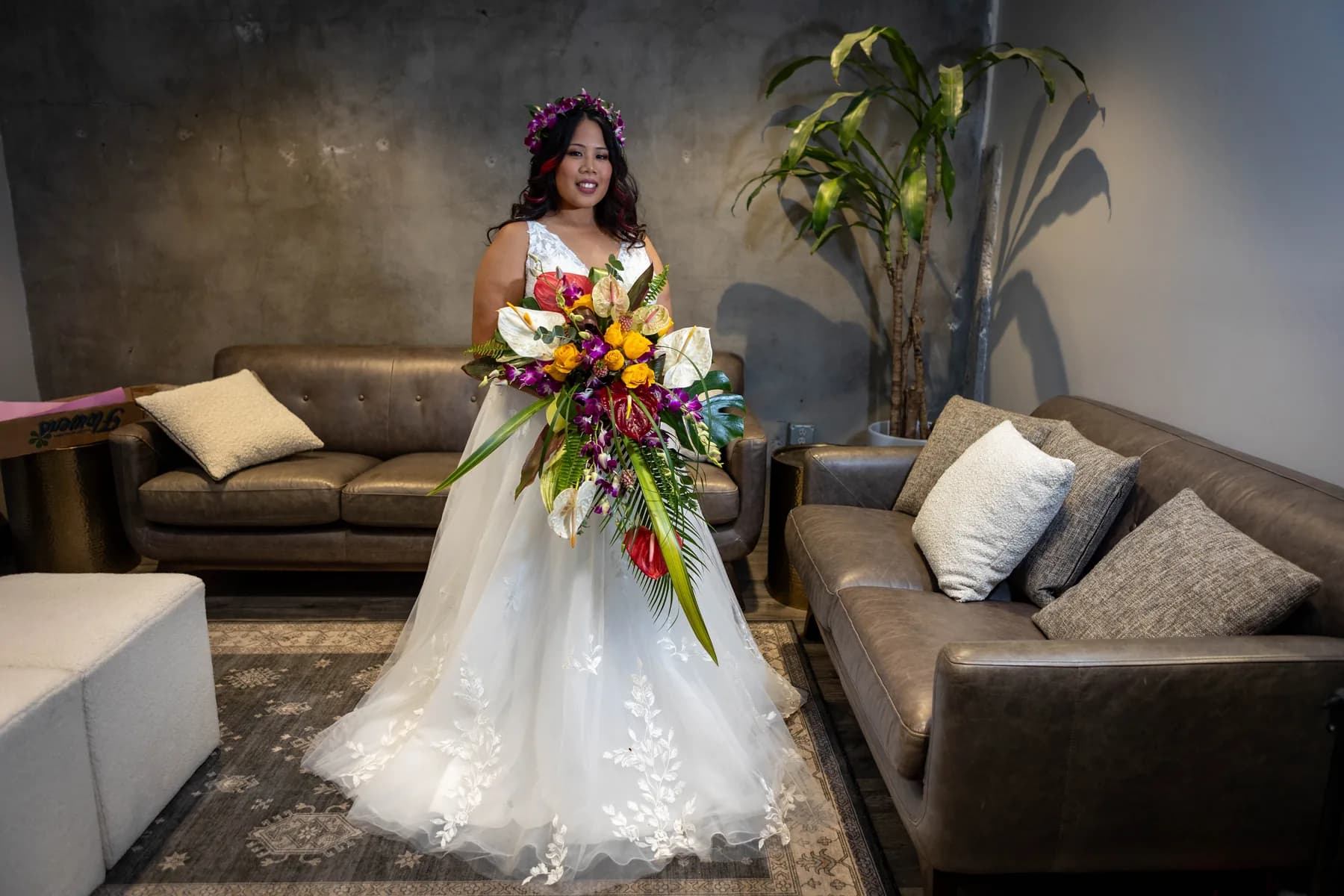
Case study 1 · Interior portrait
Bridal portrait in the preparation room
Focal length
24mm
Aperture
f/2.8
Shutter speed
1/80 second
ISO
500
Flash
Fired
Azalea stands with her bouquet against a restrained concrete-and-neutral interior. The colorful flowers are the visual anchor; the surrounding furniture and wall create context without competing with her. This is a useful example of controlling a busy preparation room through framing rather than pretending the room is an empty studio.
At 24mm, the frame edges matter: the room should provide context without distracting from Azalea. The white dress and pale wall make highlight detail important, while the bouquet provides the strongest color. At 1/80 second, a brief still moment helps keep her eyes crisp.
120mm · f/2.8 · 1/1,250 sec · ISO 200 · no flash.
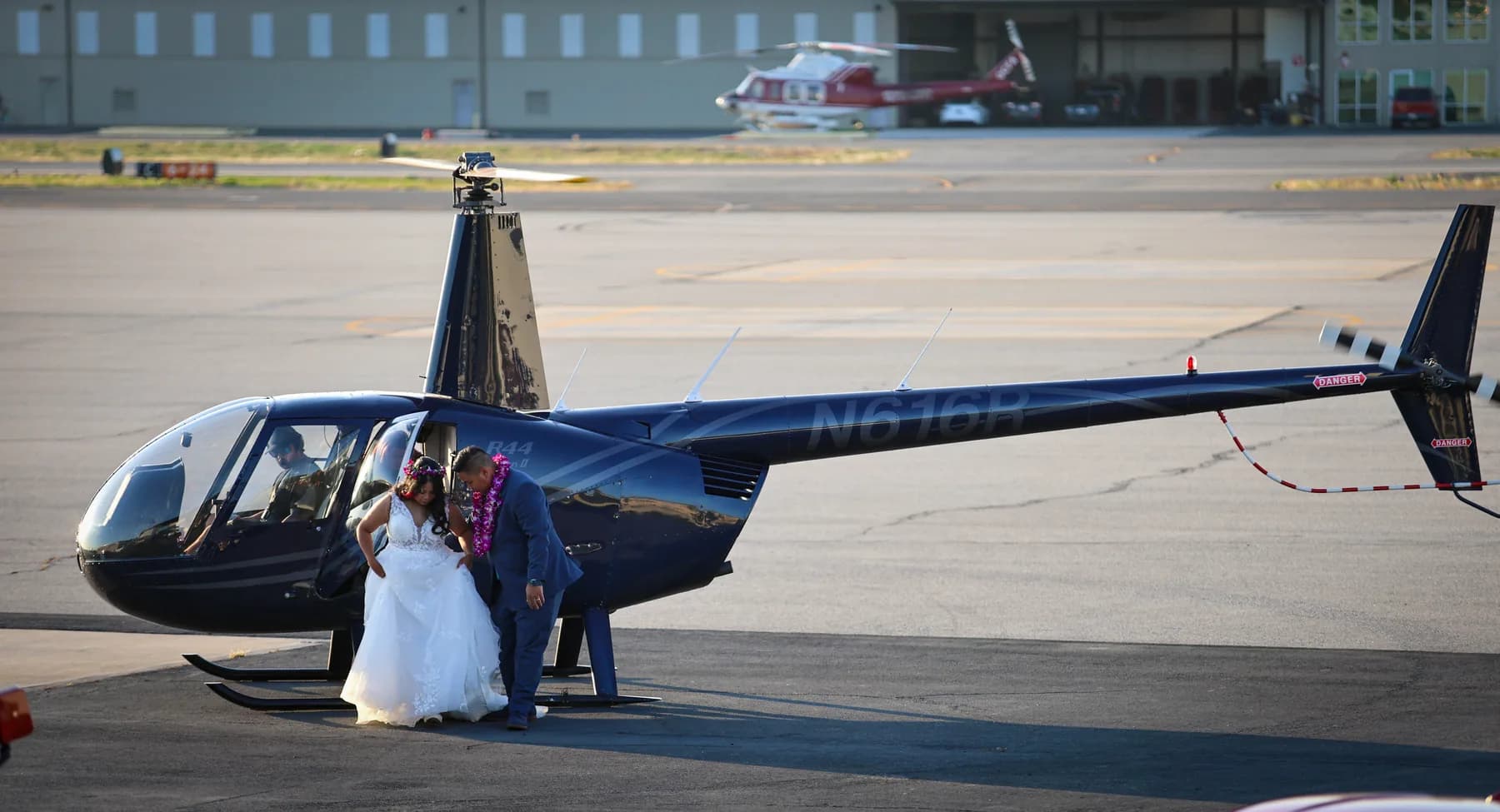
Case study 2 · Moving arrival
Stepping out of the helicopter
Focal length
120mm
Aperture
f/2.8
Shutter speed
1/1,250 second
ISO
200
Flash
Did not fire
Jed helps Azalea as they step away from the blue helicopter. The moment includes movement, reflective aircraft surfaces, hard sun, and deep shade. The long focal length isolates the action while keeping enough aircraft in view to explain where the couple is.
The fast shutter helps freeze the couple’s movement; it does not eliminate the need to track focus. Expose with the white dress and bright tarmac in mind, then check that faces in shade retain detail. A longer focal length can simplify a crowded background, but it narrows the field of view. The venue or aircraft team controls safe access; never step into an unapproved operating area for a photograph.
35mm · f/2 · 1/160 sec · ISO 1000 · flash · four speedlights + one strobe.
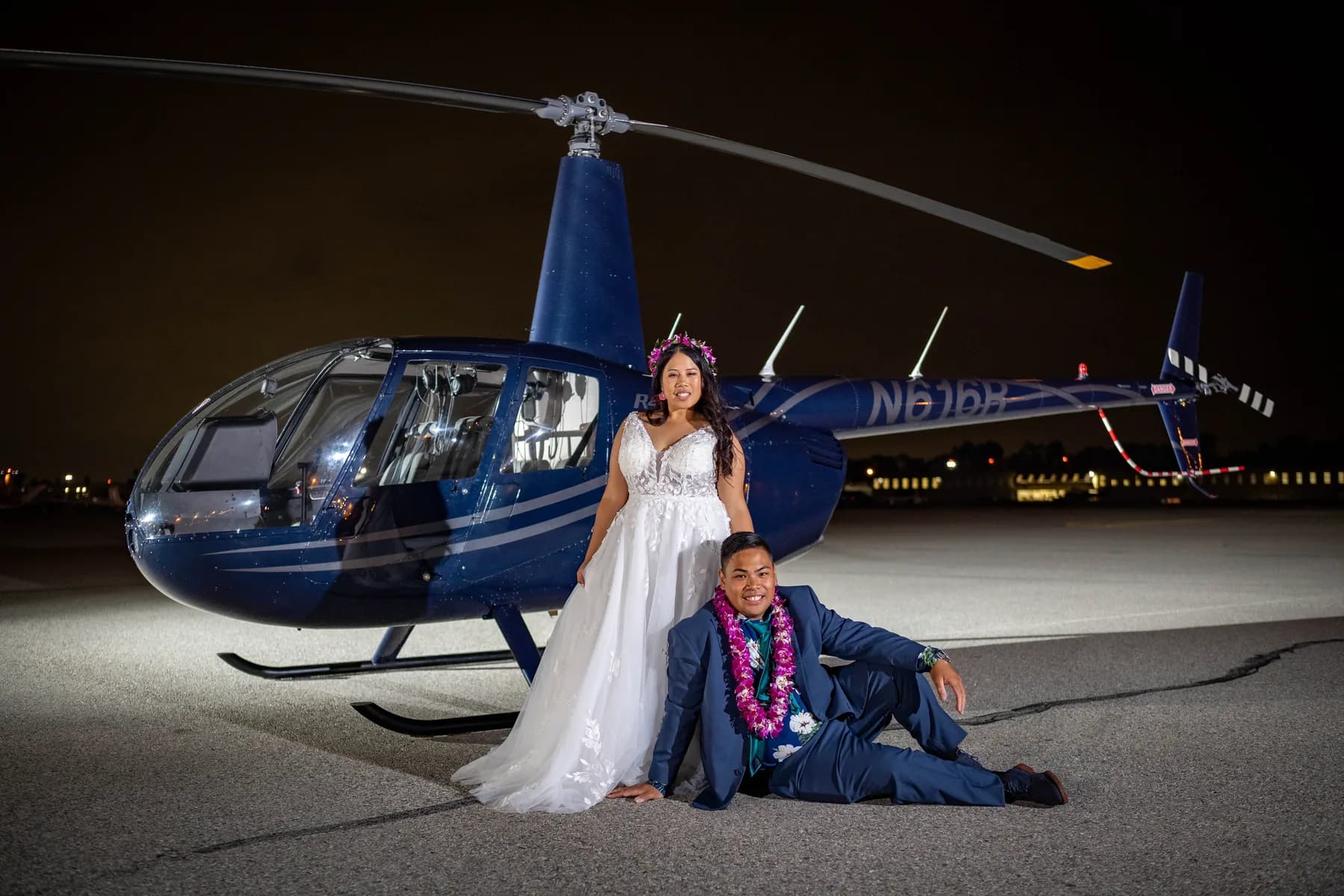
Case study 3 · After-dark portrait
Night portrait on the airfield
Focal length
35mm
Aperture
f/2
Shutter speed
1/160 second
ISO
1000
Flash
Fired
Lighting count
Four speedlights and one strobe
For the final portrait, I wanted Jed and Azalea to stand out while the blue helicopter and dark airfield remained part of the story. I used four speedlights and one strobe to illuminate the scene, keeping the couple readable without making the night disappear.
For an after-dark environmental portrait, decide how much ambient light to retain so the scene still feels like night. Check the people, the dress and suit, and how clearly the aircraft separates from the background. Any lights and stands must stay within the venue-approved safe area.
3 scenes compared
Settings changed with the light.
Photo
Challenge
Focal length
Aperture
Shutter
ISO
Flash
Bridal portrait
Mixed interior light
24mm
f/2.8
1/80s
500
Fired
Helicopter exit
Movement and hard sun
120mm
f/2.8
1/1,250s
200
Did not fire
Night portrait
People and aircraft after dark
35mm
f/2
1/160s
1000
Fired
Across the wedding day
Common lessons
Read the light and movement before choosing a setting.
Keep the surroundings recognizable without losing the people.
Use the settings as examples, then respond to the light and movement of the actual scene.
Plan aircraft access and lighting inside the venue-approved safe area.
Questions about the photograph
Behind the frame.
Why use 1/1,250 second for the helicopter exit?
That recorded shutter speed helped accommodate fast, unrepeated movement in strong daylight. Focus tracking and timing still matter.
How did you light the night portrait?
I used four speedlights and one strobe so Jed and Azalea, the helicopter, and the airfield could remain visible against the night. The exact balance for another scene depends on ambient light, distance, and the look you want.
Can these settings be copied at another wedding?
Use them as case studies, not presets. Light direction, distance, subject speed, ambient exposure, and venue safety rules will change.
Begin the conversation
Technical choices should support the people and place. Explore Jed and Azalea’s complete wedding, the Hangar 21 South venue guide, or share your own plans.